
- Contact Us


News Center
Features of CNC Double-Head Lathes
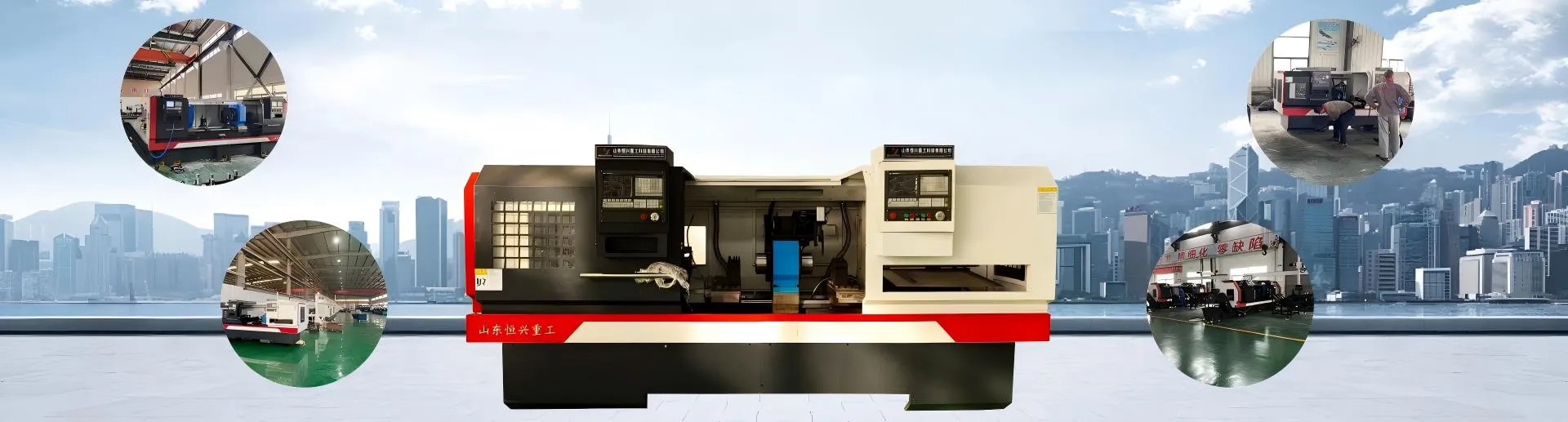
As an advanced machining tool, the dual-head CNC lathe holds a significant position in modern manufacturing due to its technical characteristics. The following are the primary technical features of the dual-head CNC lathe:
The dual-spindle CNC lathe is equipped with two independent spindles, enabling dual-station machining on a single machine. This configuration not only enhances machining efficiency but also allows for the completion of more complex machining tasks within the same processing cycle. The dual-spindle setup facilitates simultaneous machining of different workpieces or concurrent operations on different sections of the same workpiece, significantly reducing production cycles and boosting production capacity.
Double-head CNC lathes offer high-precision machining capabilities. Their CNC systems enable precise control, ensuring dimensional tolerances and surface roughness meet stringent requirements during processing. The application of modern CNC technology and servo control systems allows double-head lathes to maintain exceptional stability and repeatability throughout machining—a critical advantage for manufacturing components with demanding accuracy specifications.
Dual-head CNC lathes are typically equipped with versatile machining modules, such as milling, drilling, and tapping capabilities. This multifunctional configuration enables the equipment to handle various complex machining requirements, reducing the number of times workpieces need to be transferred between different machines. This enhances machining flexibility and production efficiency. Through modular design, dual-head CNC lathes can expand their functionality based on specific machining needs, meeting the demands of diverse production tasks.
Dual-head CNC lathes feature a high level of automation. The CNC system enables users to program processing parameters and techniques, significantly reducing the complexity of manual operations and potential errors. The automated production process not only enhances machining stability but also lowers reliance on operator skill, making the production process more intelligent and energy-efficient.